Child Rights and Family-Based Care: Khmelnytskyi Discusses Regional Challenges
Khmelnytskyi hosted a discussion on protecting children's rights, developing family-based care, and overcoming the consequences of war for minors.
Key points
- Khmelnytskyi hosted discussions on child rights and family-based care
- The region shelters 210,000 children, including 14,000 displaced minors
- The Ombudsman outlined the scale of child deportations and wartime challenges
- A Barnahus-model Child Protection Center operates in the region
Ahead of World Children's Day, Khmelnytskyi hosted a comprehensive discussion focusing on the protection of minors' rights and the development of alternative care forms. Representatives from the regional administration, the regional council, and specialized state institutions gathered to assess the current state of child welfare under martial law conditions.
Challenges of Deinstitutionalization and Family Support
According to Serhii Tiurin, Head of the Khmelnytskyi Regional Military Administration, the region is home to 210,000 children, including approximately 14,000 internally displaced persons. The regional authorities are gradually implementing the deinstitutionalization concept, which aims to phase out boarding schools in favor of family-based upbringing forms. Currently, the region features 36 family-type orphanages and 117 foster care forms, with ongoing efforts to expand them using international partner investments.
Meanwhile, Violeta Labaziuk, Head of the Regional Council, shared broader statistics regarding the war's impact. She noted that over 5,500 war-affected children reside in the Khmelnytskyi region, while 1,663 children hold orphan status or lack parental care. She also highlighted the operation of temporary care centers providing medical, psychological rehabilitation, and support for future adoption processes.
War Consequences and the Broader Context
Dmytro Lubinets, the Ukrainian Parliament Commissioner for Human Rights, provided alarming nationwide figures during the event. He stated that since 2022, one-third of Ukrainian children have been forced to leave their homes, 1.6 million remain in temporarily occupied territories, and over 744,000 have been deported to Russia. Returning each child involves a complex operation requiring multidisciplinary coordination.
Participants also reviewed the newly established Child Protection Center operating under the Barnahus model, which minimizes psychological re-traumatization during investigative interviews with children. Despite progress in establishing foster and guardianship families, the region still maintains 18 institutional facilities housing over 1,300 children.
Source omega.lviv.ua — omega.lviv.ua/u-khmelnytskomu-obhovoryly-zakhyst-prav-ditei-ta-simeini-… ↗
Read next
 🎓Education
China Completes Unique Bridge Construction 400 Meters Above a Canyon
Workers in China's Guizhou province have connected the massive Gunyouhe bridge, built at a staggering height above a deep canyon.
 🛡️Security
Casualties rise to three following strike on Dymer
Rescue teams have concluded search operations at the site of a Russian drone strike on an apartment building in the Kyiv region, confirming three deaths.
Who is eligible for mobilization postponement through study and employment: official clarifications
Officials have detailed the categories of citizens eligible for mobilization deferral based on their education or employment status. These regulations apply nationwide, p…
 🚌Transport
Alternative for Germany Co-Leader Calls for Deportation of Millions, Including Ukrainians
Tino Chrupalla, co-chair of the far-right AfD party, has urged the deportation of millions of foreign nationals from Germany, including Ukrainian citizens, once protectio…
 🚌Transport
Government to Launch Unified Digital Platform for Ukrainian Citizens' Complaints
The Cabinet of Ministers of Ukraine has announced the creation of a centralized digital platform to process citizens' appeals and complaints. The new service aims to simp…
 🛡️Security
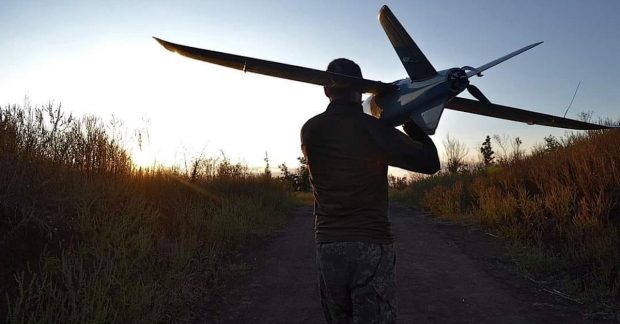
Ukrainian Drone Operators' Expertise Shapes US Army Training Programs
A US military instructor visited the Ukrainian drone academy Killhouse and adopted advanced training methods for implementation in the United States.