Beijing's Nuclear Rhetoric: Expert Explains Xi Jinping's True Motives
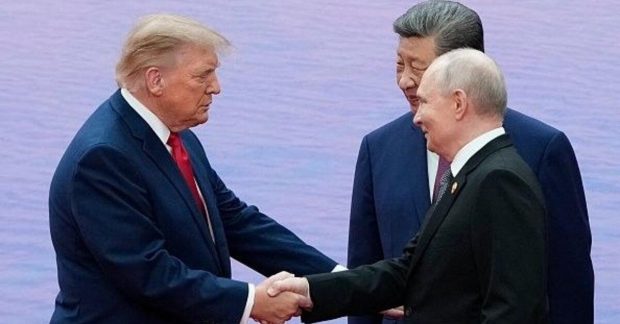
The Chinese leader's call for total disarmament is a strategic image-building move aimed at strengthening China's position on the international stage.
 🏛️Politics
Photo: UNIAN
Key points
- Xi Jinping's statement is an image-building move to gain support from the Global South.
- China seeks parity with the US and Russia while avoiding massive defense spending.
- Putin is losing influence in international negotiations, yielding ground to China and the US.
The 'Dove of Peace' Strategy
Xi Jinping's statement on the need for a total ban on nuclear weapons is viewed by experts as a masterful PR move. According to Pavlo Lakiychuk, head of security programs at the Center for Global Studies 'Strategy XXI', Beijing is attempting to distance itself from the image of an aggressor that has been associated with other world leaders.
Currently, the nuclear arsenals of the US and Russia significantly exceed China's capacity. By calling for disarmament, China is effectively seeking to achieve parity without the massive costs of an arms race. This allows Beijing to gain favor among the 'Global South' nations by positioning itself as a peacemaker.
Geopolitical Power Games
The expert notes that pragmatic interests lie behind these public statements. Donald Trump is focused on the Pacific region, where China is trying to solidify its influence, particularly regarding Taiwan. Meanwhile, Vladimir Putin, striving to maintain his status as a leader, has found himself on the periphery of agreements between Washington and Beijing.
For China, the nuclear disarmament of other nations is a favorable scenario, as it would neutralize the primary advantage held by Russia and the US. For now, Beijing continues to rapidly expand its own capabilities, viewing diplomatic initiatives as an additional tool for pressuring competitors.
Source UNIAN — unian.ua/world/si-czinpin-zaklikav-znishchiti-pro-yadernu-zbroyu-ch… ↗
Read next
 🛡️Security
ISW analyzes humanitarian corridor proposals: why the situation in Kostiantynivka differs
Analysts at the Institute for the Study of War explain why the Russian initiative to evacuate Kostiantynivka is unfeasible, unlike Ukraine's proposals for the Kherson and…
 🛡️Security
Another attack on the oil refinery in Novoshakhtinsk: consequences for enemy logistics
On the night of November 23, the Novoshakhtinsk Oil Products Plant in the Rostov region was attacked. The facility is a key fuel supplier for the Russian occupation force…
 🚨Events
Shooting in Kharkiv leaves one dead: police launch special operation
A fatal shooting occurred in Kharkiv on the evening of November 22. Law enforcement authorities are currently searching for those involved in the crime.
 💡Tech
Fragments of latest Russian X-101 missiles discovered in Poland
Remnants of cruise missiles manufactured in late 2026 have been found in eastern Poland. The incident has prompted an emergency meeting of the NATO North Atlantic Council…
 🛡️Security
Charity auction in Lviv region raises UAH 60 million to support Ukrainian defenders
A charity event in the Lviv region brought together communities and businesses to raise significant funds for drones and veteran rehabilitation.
 💡Tech
Nighttime UAV Attack: New Challenges for Air Defense and Interception Technologies
On the night of November 23, Ukraine faced a massive enemy drone attack, characterized by the deployment of new jet-powered UAVs.