Scientists create 'planimal' cell hybrids: what this means for science
An international research team has successfully combined genetic material from hamster cells and red algae, creating stable hybrid cells.
 💡Tech
Photo: TSN
Key points
- Animal-plant hybrid cells created
- Algae DNA persists for over 150 generations
- Most plant genes remain inactive
Researchers from the University of Tokyo have made a breakthrough in genetics by creating so-called "planimals"—hybrid cells that combine DNA from animals and plants. For the experiment, scientists used Chinese hamster cells and the red alga Cyanidioschyzon merolae.
Hybrid creation technology
Using polyethylene glycol, the researchers managed to fuse the cell membranes of two different organisms. The results were unexpected: the hybrid cells were not only able to survive but also passed the foreign genetic material to subsequent generations. The study showed that the algae DNA persisted in the hamster cells even after 155 divisions.
Professor Sachihiro Matsunaga noted that this proves the possibility of stable coexistence of genetic material from such evolutionarily distant groups. However, most of the algae genes currently remain inactive due to the protective mechanisms of mammalian cells.
Source TSN — tsn.ua/nauka_it/hibryd-roslyny-ta-tvaryny-vze-realnist-navishcho-vcheni… ↗
Read next
 🎭Culture & Sport
Kitchen trends: how to optimize space in Chernivtsi apartments
Interior designers advise moving away from bulky dining tables in favor of compact solutions that resemble cozy cafes.
 🛡️Security
Explosions and smoke reported in Russia's Krasnodar near military facility
On the night of November 22, Krasnodar was targeted by drone strikes, resulting in smoke near a Russian National Guard base.
 🏛️Politics
Donald Trump comments on the resignation of press secretary Caroline Leavitt
U.S. President Donald Trump expressed regret over the departure of White House press secretary Caroline Leavitt, who left her post to focus on her family after the birth …
 🩺Health
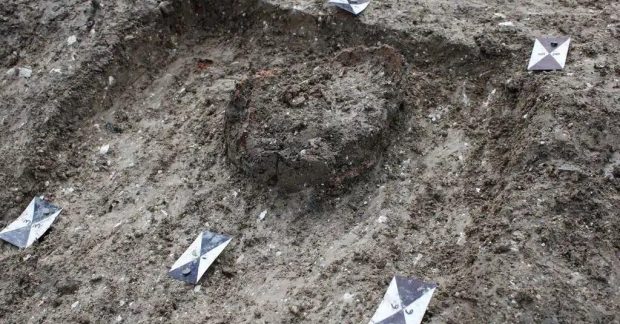
Archaeological discovery in Britain: unique Roman-era infant burial found
Archaeologists in Buckinghamshire have uncovered a rare Roman-era infant burial inside a ceramic vessel, accompanied by ritual offerings.
 💼Economy
Donald Trump publicly reaffirms friendly attitude toward Vladimir Putin
US President Donald Trump posted a photograph with the Russian leader, captioning it with a reference to friendship despite international criticism.
 🛡️Security
SSU's Alpha special forces neutralize over 4,300 Russian troops in one week
The SSU's Alpha Special Operations Center has set a new efficiency record, neutralizing more than 4,300 Russian soldiers in seven days.